What Parents Should Know About Windshield Cameras & Safety Systems
Windshield Cameras & Safety Systems: What Every Vehicle Owner Should Know
The windshield in a family vehicle is more than a piece of glass. The camera mounted behind it is actively working to protect everyone in the car on every drive, and what happens to that camera after a windshield replacement matters more than most parents realize.
The Safety Systems Running Through Your Windshield Camera
In most vehicles built in the last several years, a forward-facing camera is mounted behind the rearview mirror and looks through the windshield to monitor the road ahead. That camera is the primary sensor for a range of safety features that family vehicles in Northern Virginia rely on every day.
- Automatic Emergency Braking detects vehicles, pedestrians, and cyclists ahead and applies the brakes when a collision is imminent and the driver has not responded in time. On a vehicle where the driver's attention is split between the road and passengers in the back seat, that system is not a luxury. It is a meaningful layer of protection that engages when it is needed most.
- Lane Departure Warning and Lane Keeping Assist track lane markings and alert the driver when the vehicle drifts across a line without a signal. On the highway stretches that Northern Virginia families travel routinely, these systems are running in the background every mile.
- Forward Collision Warning tracks the closing speed to the vehicle ahead and alerts the driver before the situation becomes critical, giving drivers the extra moment they need to brake before automatic systems engage.
- Pedestrian and Cyclist Detection extends the emergency braking system's awareness to people in or near the vehicle's path. Around school zones, crosswalks, and busy parking lots, this is one of the most relevant features a family vehicle carries.
- Traffic Sign Recognition reads posted speed limits and displays them on the instrument cluster, helping drivers stay aware of limits in school zones and residential areas where they change frequently.
Why These Systems Matter Most in Larger Family Vehicles
Minivans and larger family SUVs are where ADAS technology delivers its most practical value, and they are also among the most common vehicles Centreville and Northern Virginia families drive. The Chevrolet Suburban, Chevrolet Tahoe, Ford Expedition, GMC Yukon, Toyota Sequoia, and similar three-row SUVs are built for families but present unique driving challenges. The large footprint, extended rear overhang, and limited sightlines in reverse make systems like rear cross-traffic alert, blind spot monitoring, and automatic emergency braking genuinely useful rather than incidental features.
Minivans like the Honda Odyssey, Toyota Sienna, and Chrysler Pacifica share similar dynamics. The longer wheelbase, sliding door operation, and frequency of school zone and parking lot driving all put the driver in situations where the ADAS systems running through the windshield camera are called upon regularly.
Every one of those systems depends on a properly calibrated forward-facing camera. When the windshield is replaced and that camera is not recalibrated, those features stop working correctly on a vehicle category where they matter most.
How ADAS Technology Works & Why Calibration Is Required After Replacement
The ADAS camera mounted behind the rearview mirror reads the road through a fixed optical baseline established during factory calibration. It knows what a lane line looks like at a specific distance. It knows what a following distance of four car lengths looks like at 60 miles per hour. It knows how to distinguish a moving vehicle from a stationary object on the shoulder. All of that interpretive accuracy is tied to the optical properties of the glass it looks through.
When the windshield is replaced, those properties change. Even replacement glass manufactured to the exact same OEM specification introduces variables in optical clarity, thickness, and angle that shift the camera's effective point of reference. The system is still running. The dashboard shows no warning. But the data the camera is generating no longer matches the calibrated baseline it was built around.
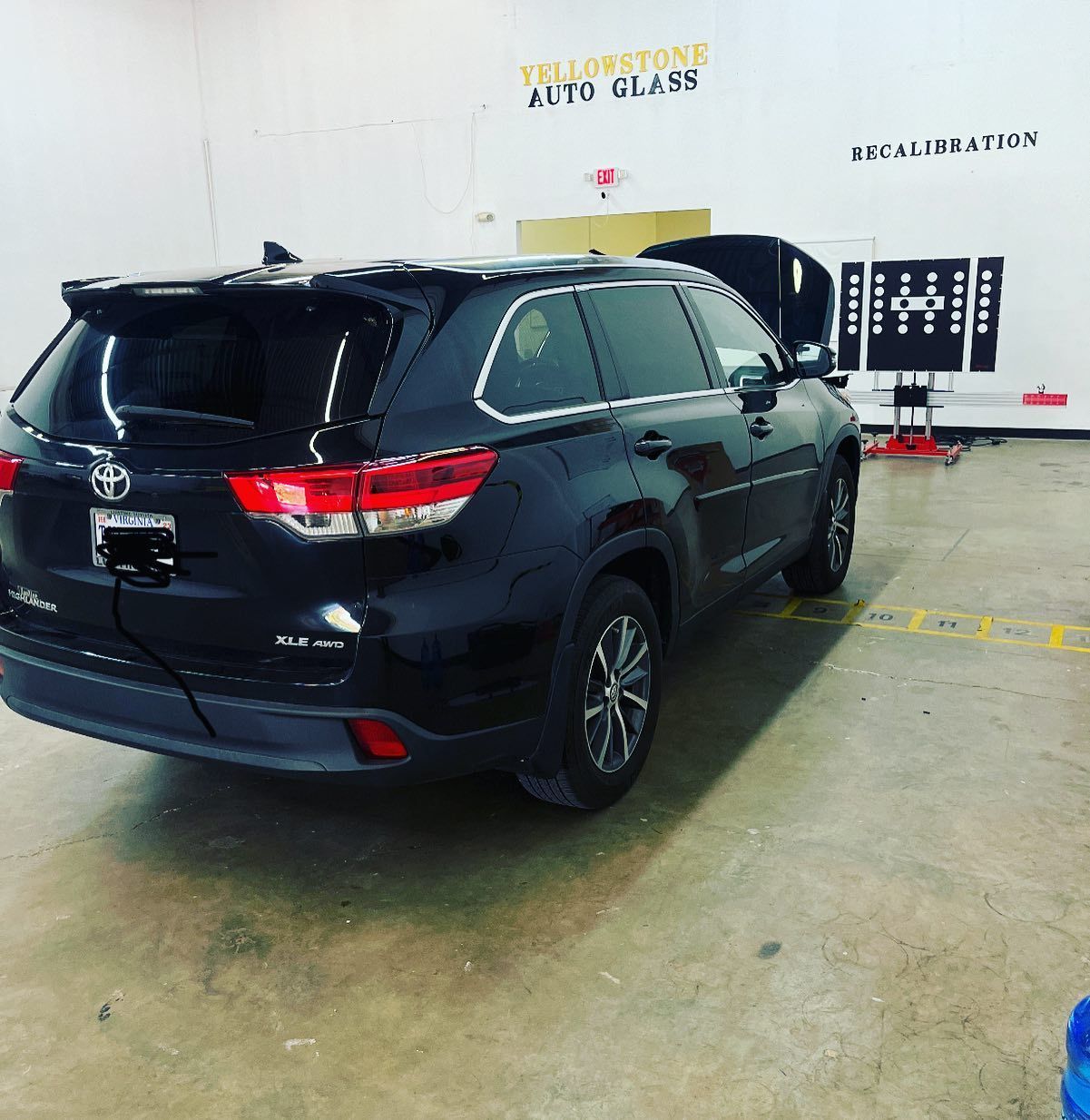
Recalibration restores that baseline. Using certified diagnostic equipment, technicians align the camera back to its correct reference points through either a static process using precision targets positioned in front of the vehicle, a dynamic process performed while the vehicle is driven, or both, depending on what the specific vehicle requires. Once calibration is complete and verified, every system running through the camera is functioning accurately again.
Skipping calibration on a family vehicle means parents are driving with safety systems that appear to be working but are not. Automatic emergency braking that activates late. Lane departure warnings that fire on straight roads or go silent when they should activate. Pedestrian detection that does not register correctly. These are not acceptable outcomes on a vehicle carrying a family.
What to Ask When Your Family Vehicle Needs a Windshield Replacement
Parents scheduling a windshield replacement on a family vehicle should ask three questions before booking:
- Does my vehicle require ADAS calibration after replacement? Any vehicle with automatic emergency braking, lane departure warning, or adaptive cruise control almost certainly does. The shop should confirm this before the appointment.
- What calibration equipment and process do you use? Calibration requires specialized diagnostic equipment specific to the vehicle platform. A shop that uses cameras in a controlled environment and verifies the result before the vehicle leaves produces reliable outcomes.
- What warranty covers the replacement? The answer should cover both the glass and the installation against defects and leaks for a meaningful period.
The Yellowstone Auto Glass Standard for Family Vehicles in Northern Virginia
Yellowstone Auto Glass provides mobile windshield replacement services throughout Northern Virginia with advanced cameras and diagnostic technology for ADAS calibration. Every equipped vehicle receiving a windshield replacement gets calibration with camera verification, confirming that all safety systems are reading the road accurately before the vehicle is returned.
Our team uses OEM or better-quality glass on every replacement and backs all work with a National Lifetime Warranty covering air and water leaks, defective materials, and workmanship for as long as the customer owns the vehicle. Family vehicles can be driven safely within 90 minutes of a completed replacement. With over 15 years of experience and more than 200 five-star reviews, Yellowstone Auto Glass has built its reputation on the precision and reliability that parents trusting us with their family vehicles deserve.
Yellowstone is a preferred partner of all major insurance providers and can handle the claims process directly so parents dealing with a cracked windshield do not also have to manage paperwork with their insurer.
Windshield Replacement & ADAS Calibration in Centreville & Northern Virginia Areas
Yellowstone Auto Glass serves Centreville, Fairfax, Springfield, and Chantilly with certified windshield replacement, ADAS calibration, and auto glass services for all personal and commercial vehicles, including luxury models. Contact Yellowstone Auto Glass today for a free quote and get your family vehicle's windshield replaced and calibrated correctly.